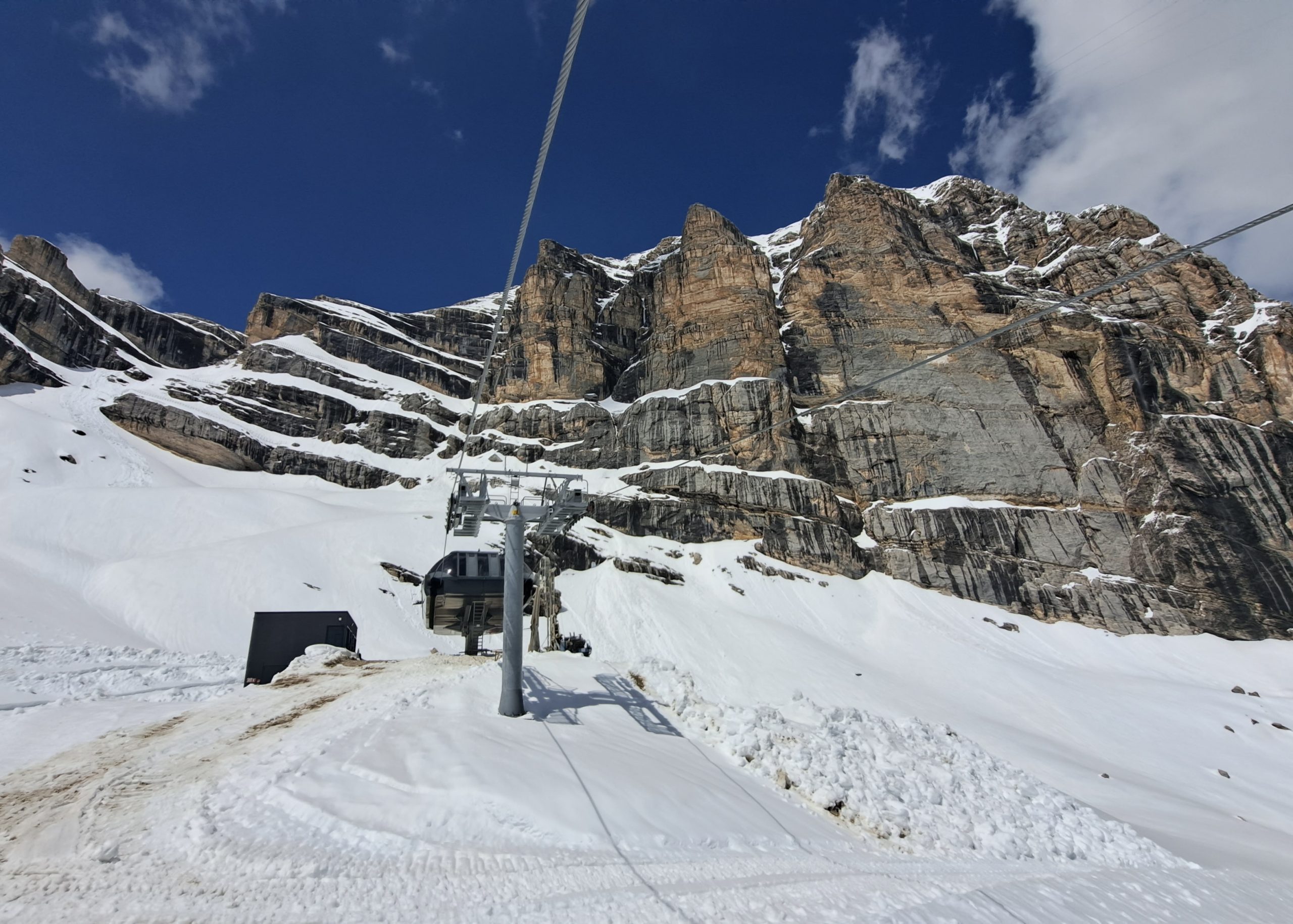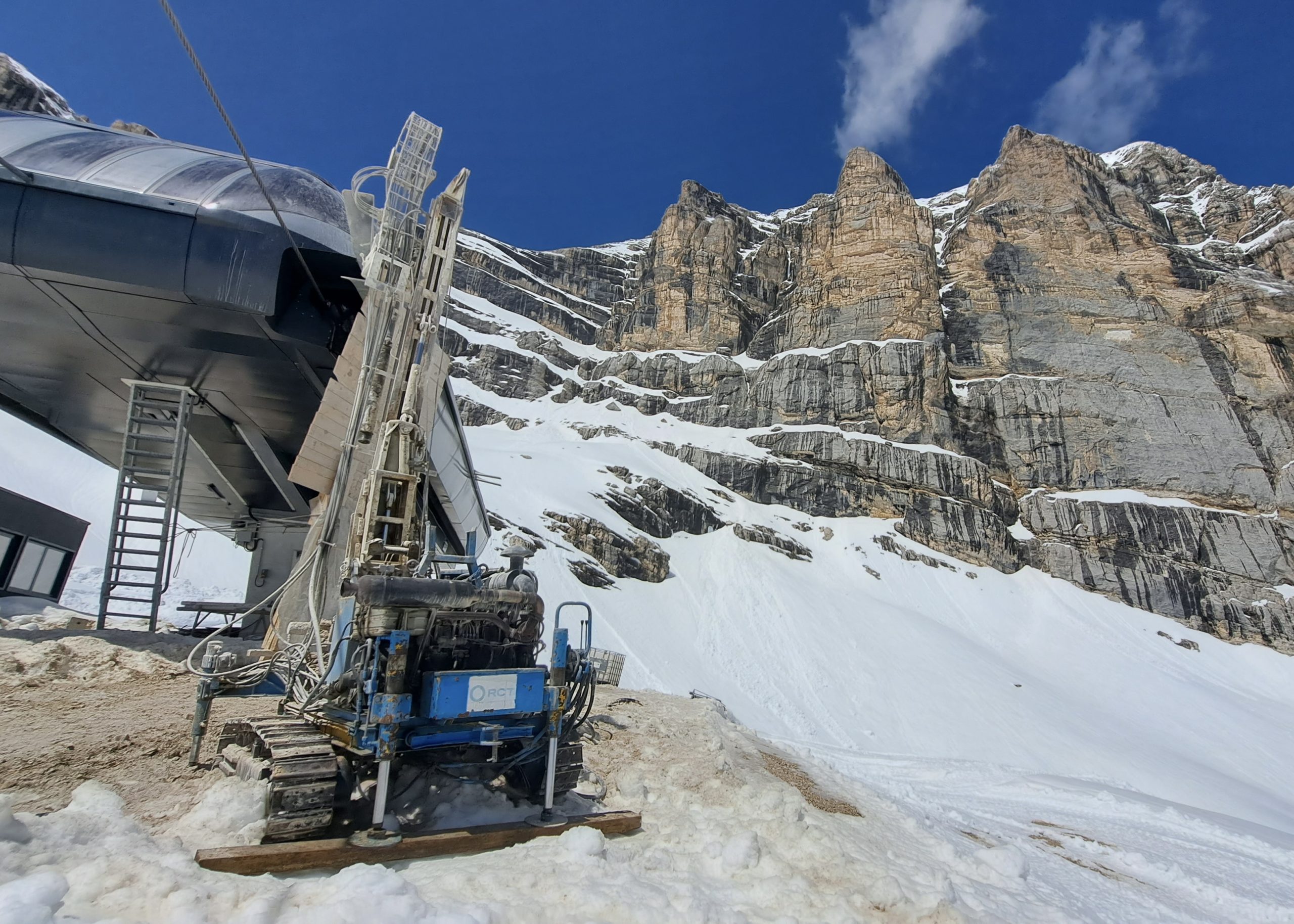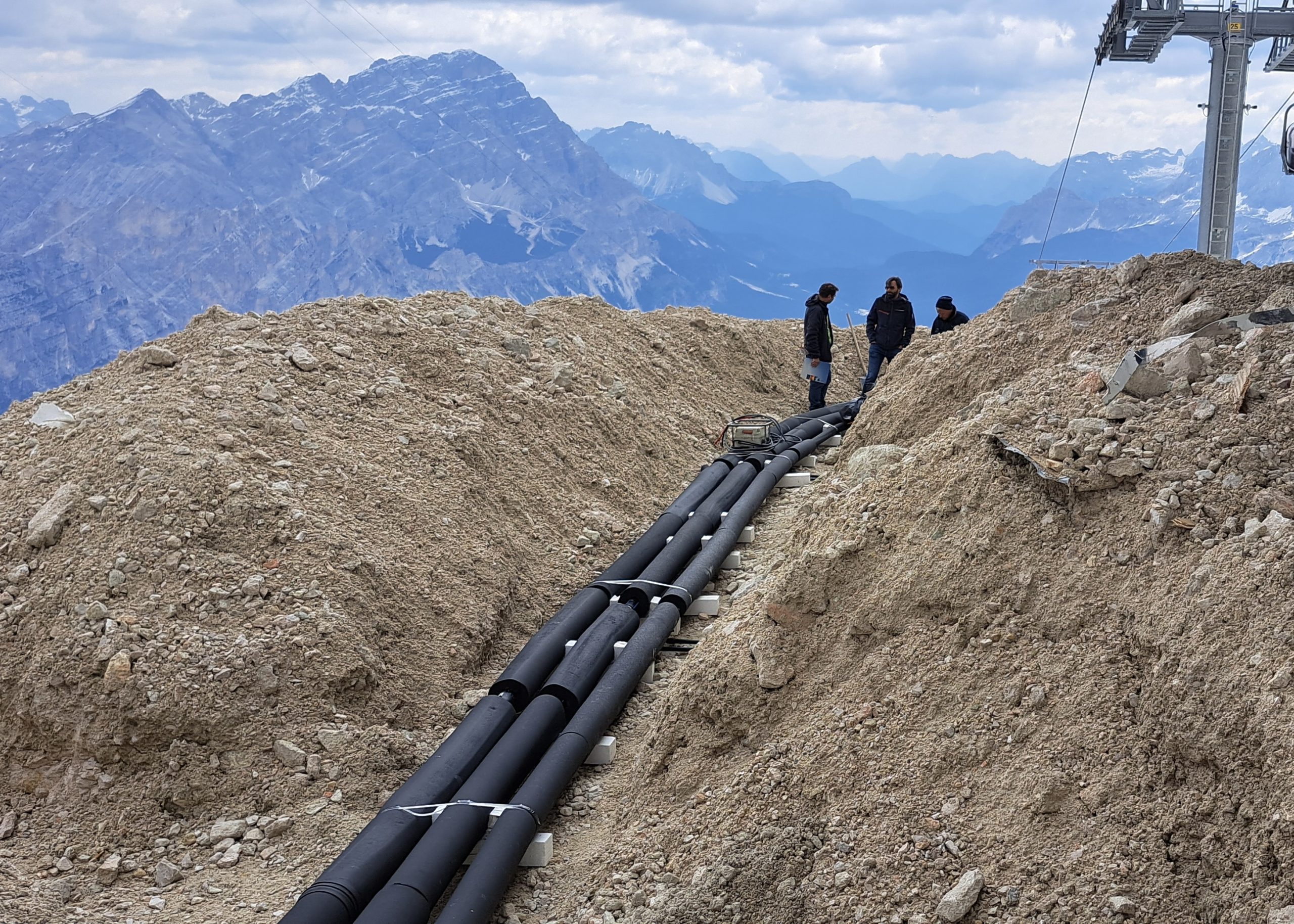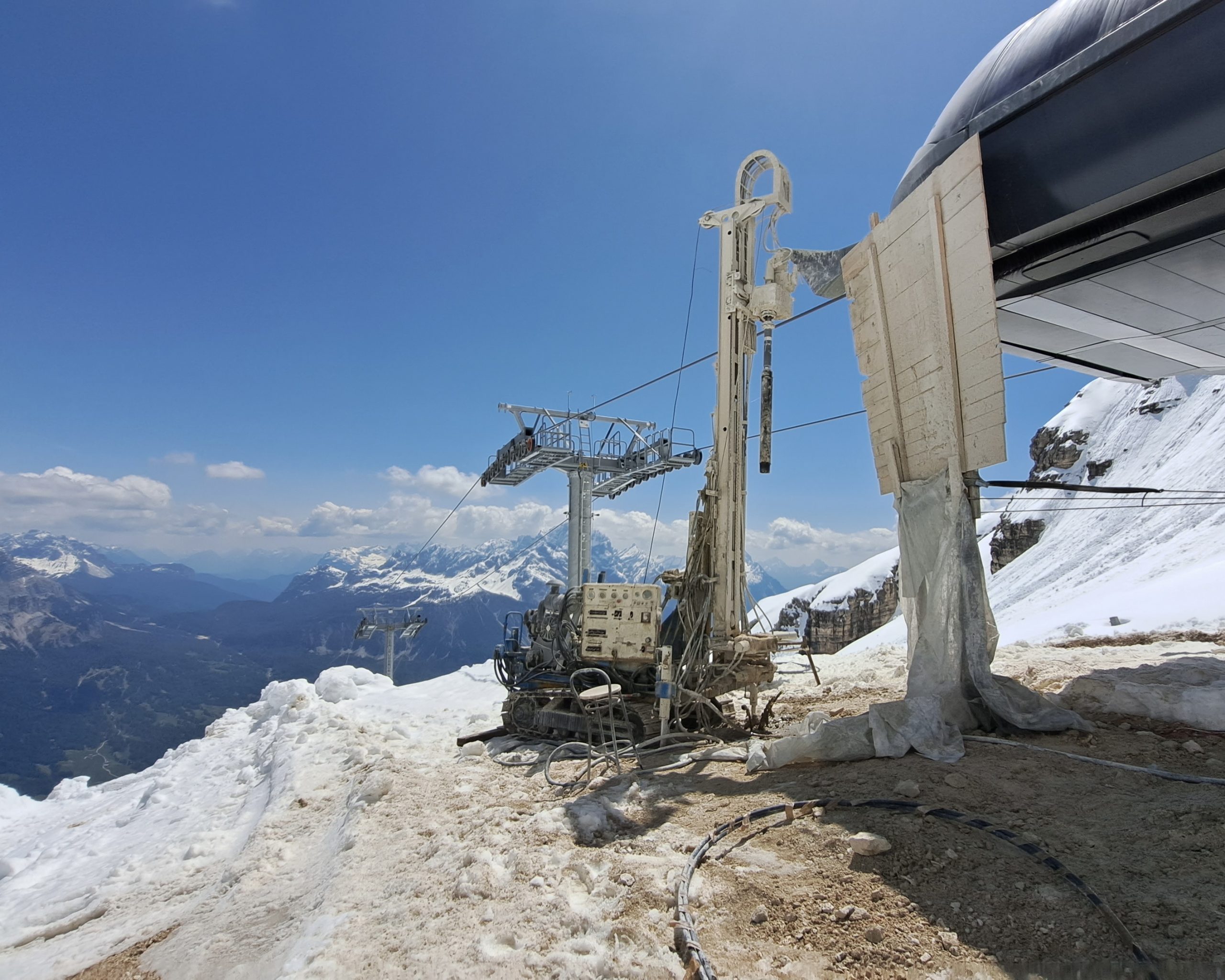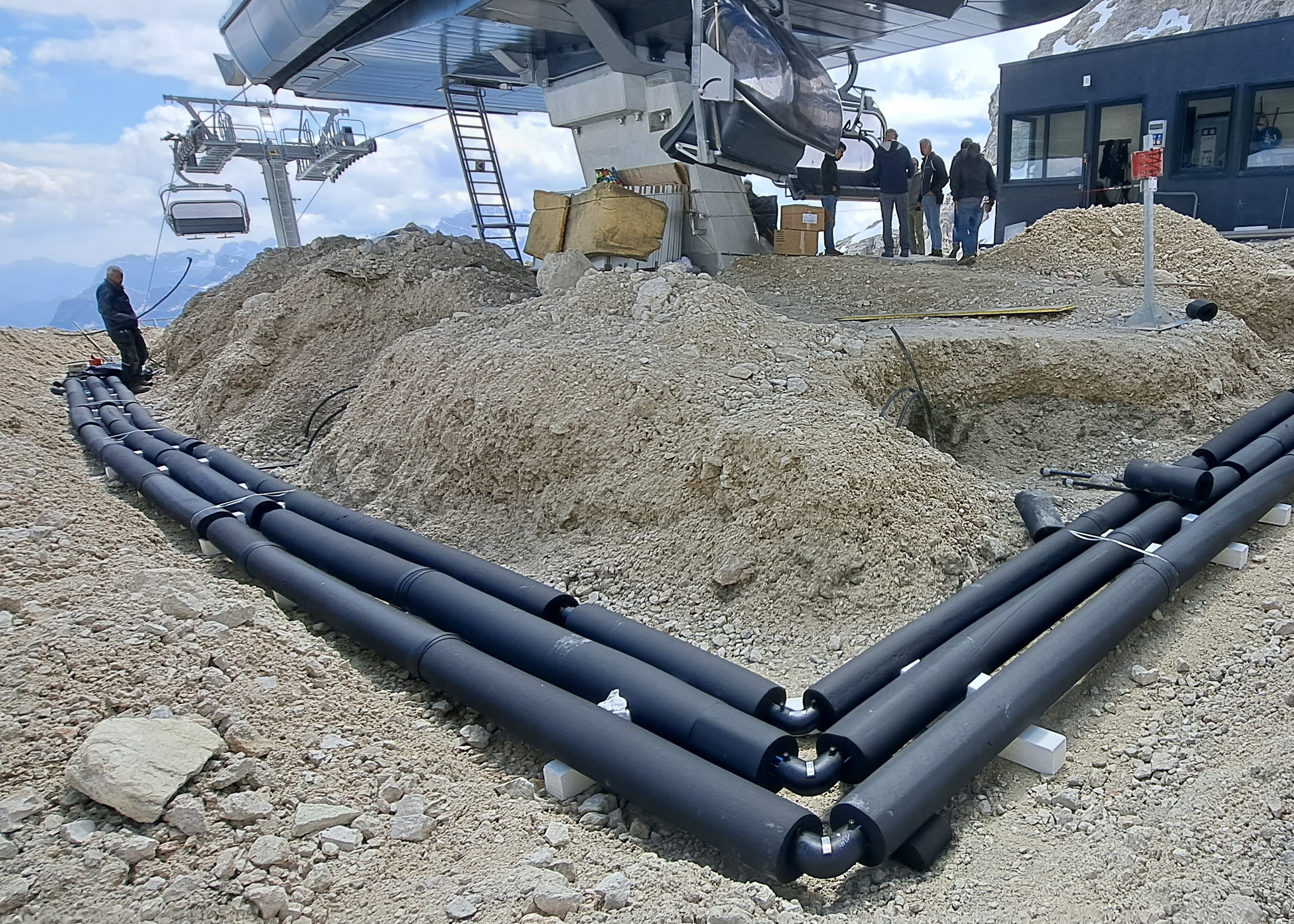
The Cortina Bus Tofana project aims to stabilise the underground permafrost, which is showing the first signs of subsidence. This is achieved through a combination of vertical geothermal energy and an electrically powered cooling system, which is fed by a photovoltaic system. The permafrost is returned to its solid state through cooling. For this purpose, 10 geothermal probes with a length of 20 metres are used to extract heat from the ground. The system uses a cooling liquid (water and antifreeze) at a temperature of -8°C.
The geothermal probes extract heat from the ground and transfer it to the electrical refrigeration system, which cools the ground further. This system is located in the service building of the cable car station and uses a refrigerant that circulates through a compressor and absorbs energy from the ground through a heat exchanger (evaporator). The gaseous refrigerant is then compressed to increase its temperature and pressure before being released into the outside air through another heat exchanger (condenser). The refrigerant liquefies again and releases the absorbed heat into the environment.
A photovoltaic system with an output of 16.5 kWp is used to supply the system with energy. This system is installed on the roof of the cable car mountain station and ensures that the electrical energy required for the refrigeration system and the circulation pumps is generated directly on site. The horizontally installed solar panels minimise the aesthetic impact and are optimally protected against wind and weather. Throughout the year, the photovoltaic system covers the entire energy requirements of the system, resulting in CO2-neutral operation.
The system is designed to provide a cooling capacity of around 8 kW to keep the permafrost soil stable for years to come. A thermal simulation of the subsoil was carried out to analyse the behaviour of the soil over an operating period of 25 years and to ensure that the cooling capacity is sufficient to guarantee the long-term stability of the soil.